
I design interfaces and interaction flows. I know Figma inside out, I can sketch a user flow in my sleep, and I've spent years obsessing over button states and spacing grids. But ask me to write a line of code? I'd have stared at you blankly until about a month ago.
It started with a fever.
My kid was sick, and my wife and I were taking turns through the night. Medicines every six hours, but which one did we give last? Was it the tablet or the syrup? Did we already give the second dose? We were exhausted, second-guessing ourselves, scribbling on paper that kept going missing. That night I thought — this is a UX problem.
So I decided to build it myself. A simple medicine log. Free. No subscriptions, no accounts, no nonsense. Just something a tired parent or a caretaker could open and say — yes, this dose was given, at this time.
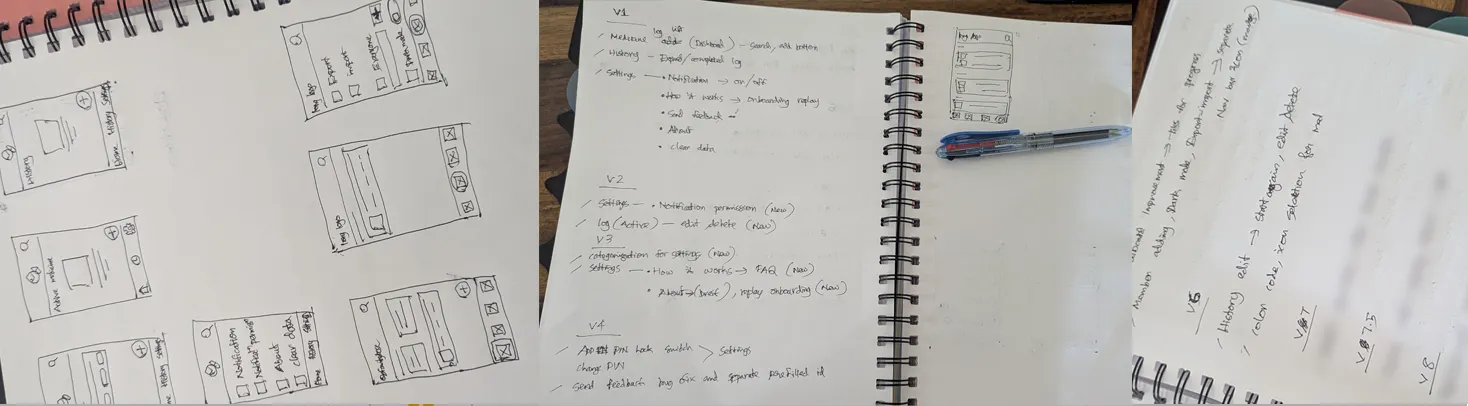
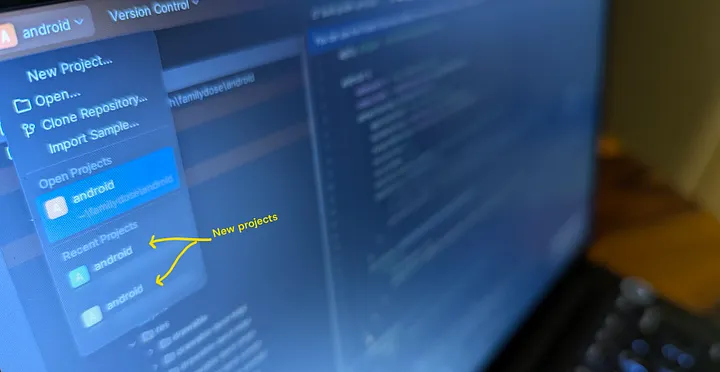
I used Claude as my coding partner and Android Studio as my build environment. I fed it my sketches, Figma designs, and the design system I had created. I described user flows and interactions in plain English — the way I'd write a design brief. Claude generated the code.
It wasn't smooth from the start. I struggled, broke things, broke them again, and gradually got a feel for it. One of the earliest walls I hit was token limits — they ran out faster than I expected. I spent sleepless nights thinking, experimenting, trying again. I even took the Pro subscription, and even then, prompting effectively took me nearly a week to figure out.
Through all of it, my wife sat beside me almost every evening — tapping through screens, flagging what felt confusing, questioning flows I'd already convinced myself were obvious. She was my sharpest tester. No filter, no politeness — just 'this doesn't make sense, redo it.' Exactly what I needed.
After we launched on the Play Store, a close friend picked it up and used it for real. He came back with small but important bugs. We fixed them together. Nothing about this was solo.
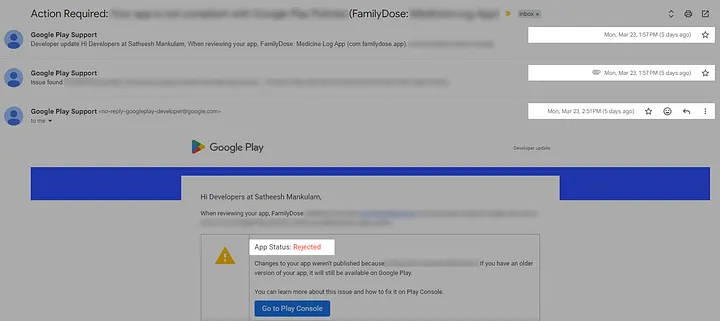
There were nights I wanted to quit. Play Store rejections, cryptic build errors, screens that looked broken on certain phones. But there was also the moment the app passed review and went live — and I sat there staring at a Play Store listing with my name on it, for something that genuinely came from a real problem, built with nothing but design instinct, stubbornness, and an AI.
If you're a designer sitting on an idea, waiting until you "learn to code properly", stop waiting. The gap between designers who can't build and engineers who can't design has never been thinner.

Whether AI will replace engineers or replace designers is still a loud, ongoing argument. I'm not here to settle it. But what I know from living it is this: that gap — the one that used to keep ideas locked inside Figma forever — is closing fast.
You already understand the user. You already know what good feels like.
Go build the thing.
One more thing — and it matters.
While building FamilyDose, I looked at what else existed in this space. Most medication reminder apps have a free tier. And most free tiers quietly cap the thing you actually need — reminders per day, number of family members you can add, history older than a month, language options.
I understand the business logic. But I kept thinking about who actually uses a medication reminder app.
It's not a power user optimising their workflow. It's a tired parent at 2am. A caregiver managing an elderly parent's schedule. Someone in a smaller city, on a mid-range phone, whose family speaks Malayalam or Hindi and not English.
For these users, hitting a paywall isn't a nudge to upgrade. It's the app failing them at the exact moment it was supposed to help.
As a UX designer, I think about access as part of the design. A health tool that works differently depending on what you can afford isn't a neutral product — it's making a choice about who deserves the full experience.
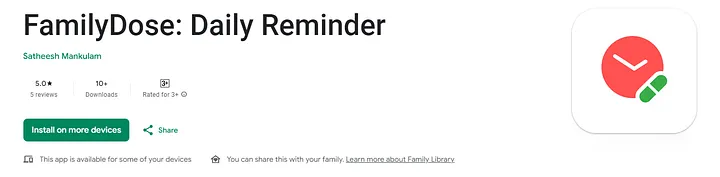
FamilyDose is completely free. All family members, all reminders, full history, trilingual support — English, Malayalam, and Hindi. No feature tiers. No subscription. That's not a marketing position. It's a design position.