

It started with a simple observation.
While using Claude for my app project, I wanted to revisit a conversation I had a few days earlier. I remembered discussing a product strategy framework and I was fairly certain I had reached a useful conclusion. The problem was that I couldn't remember when the conversation had happened.
I opened the chat and started scrolling.
The content was there. Every message was preserved exactly as I had left it. But as I moved through the conversation, I noticed something missing. I could see what had been discussed, but I couldn't easily tell when it had been discussed.
Was this from yesterday? Was it from earlier in the week? Or was it something I had generated a month ago and completely forgotten about?
For the first few minutes, I assumed I was simply looking in the wrong place. Most digital products provide some form of temporal context. Email threads have timestamps. Messaging apps have timestamps. Project management tools have timestamps. Documents have timestamps.
AI conversations, however, often feel strangely disconnected from time.
The more I thought about it, the more I realized that the issue wasn't actually about timestamps. The timestamp was only a symptom of a much larger problem.
The real issue was the absence of temporal awareness.
As designers, we often think about information architecture in terms of hierarchy, discoverability, and organization. But we rarely think about time as part of that structure. Yet time is one of the primary ways humans organize information.
When people recall memories, they rarely remember isolated facts. Instead, they remember sequences.
"I did that yesterday."
"We discussed that after the workshop."
"I made that decision before the stakeholder review."
Time provides context. Without it, information becomes harder to interpret.
This realization made me look at AI conversations differently.
A few years ago, AI chats were mostly short interactions. Users asked a question, received an answer, and moved on. Today, that behavior is changing rapidly. People use AI to brainstorm product ideas, write documents, conduct research, manage projects, learn new skills, and maintain long-running discussions that stretch across weeks or even months.
In many ways, AI conversations are evolving into personal workspaces.
The problem is that most AI interfaces are still designed as if they are simple chat windows. They preserve content remarkably well, but they do very little to preserve chronology.
To understand whether this was an isolated issue, I looked at other AI products.
Despite their differences, all three products share a common assumption: preserving the conversation is enough.
I wasn't convinced that it was.
Imagine a product designer using AI throughout a week-long project. On Monday they perform competitor research. On Wednesday they generate concepts. On Friday they finalize recommendations. Two weeks later they return to the conversation looking for a specific decision.
Without temporal context, every insight appears equally recent. The final recommendation sits beside early-stage exploration. Draft ideas sit beside validated conclusions. The timeline disappears.
The user knows what happened, but they no longer know when it happened.
That distinction may seem small, but it fundamentally changes how information is interpreted.
The absence of time creates additional cognitive effort because users are forced to reconstruct the timeline themselves. They must rely on memory instead of interface support. This directly conflicts with one of the most important usability principles: recognition should be easier than recall.
As I explored the problem further, another insight emerged.
Users are not actually asking for timestamps.
Nobody wakes up and thinks, "I wish this chat displayed 3:42 PM." What users are really asking is:
When did I make this decision?
How old is this information?
Is this still relevant?
Which version came last?
How much time has passed since I created this task?
The timestamp is simply the tool that helps answer those questions. The deeper need is confidence. Confidence that the information is current. Confidence that the correct version is being referenced. Confidence that AI memory is grounding itself in the right context.
This becomes increasingly important as AI products introduce memory and long-term conversation features. When an AI references something from a previous discussion, users need ways to evaluate the relevance of that information. A suggestion generated yesterday carries different weight than one generated six months ago.
Without temporal context, both pieces of information appear identical.
The Design Principle
At that point, I stopped thinking about timestamps as a feature and started thinking about temporal awareness as a design principle. The challenge wasn't to display more metadata. The challenge was to help users understand the evolution of their conversations over time.
The Solution: Progressive Disclosure
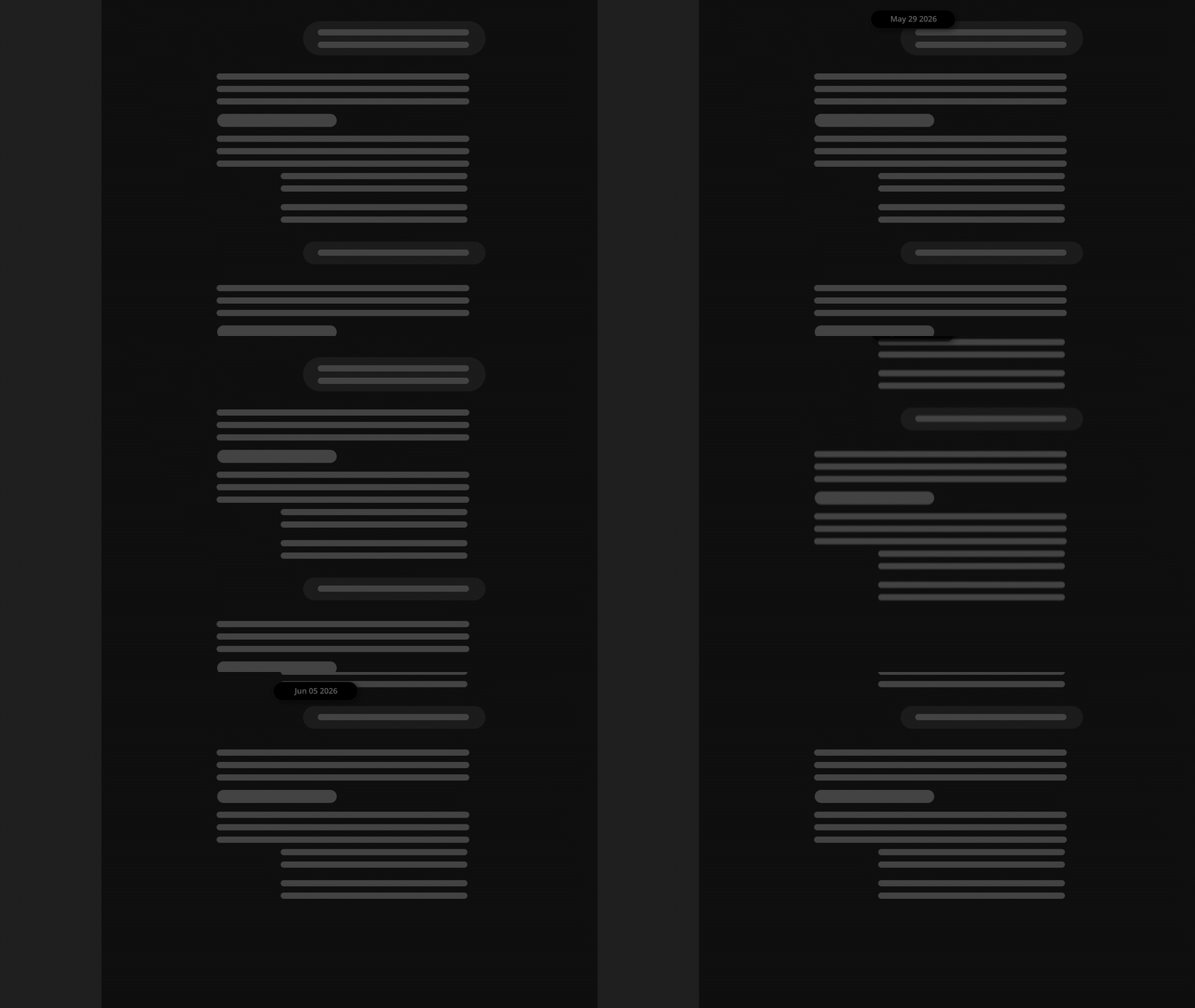
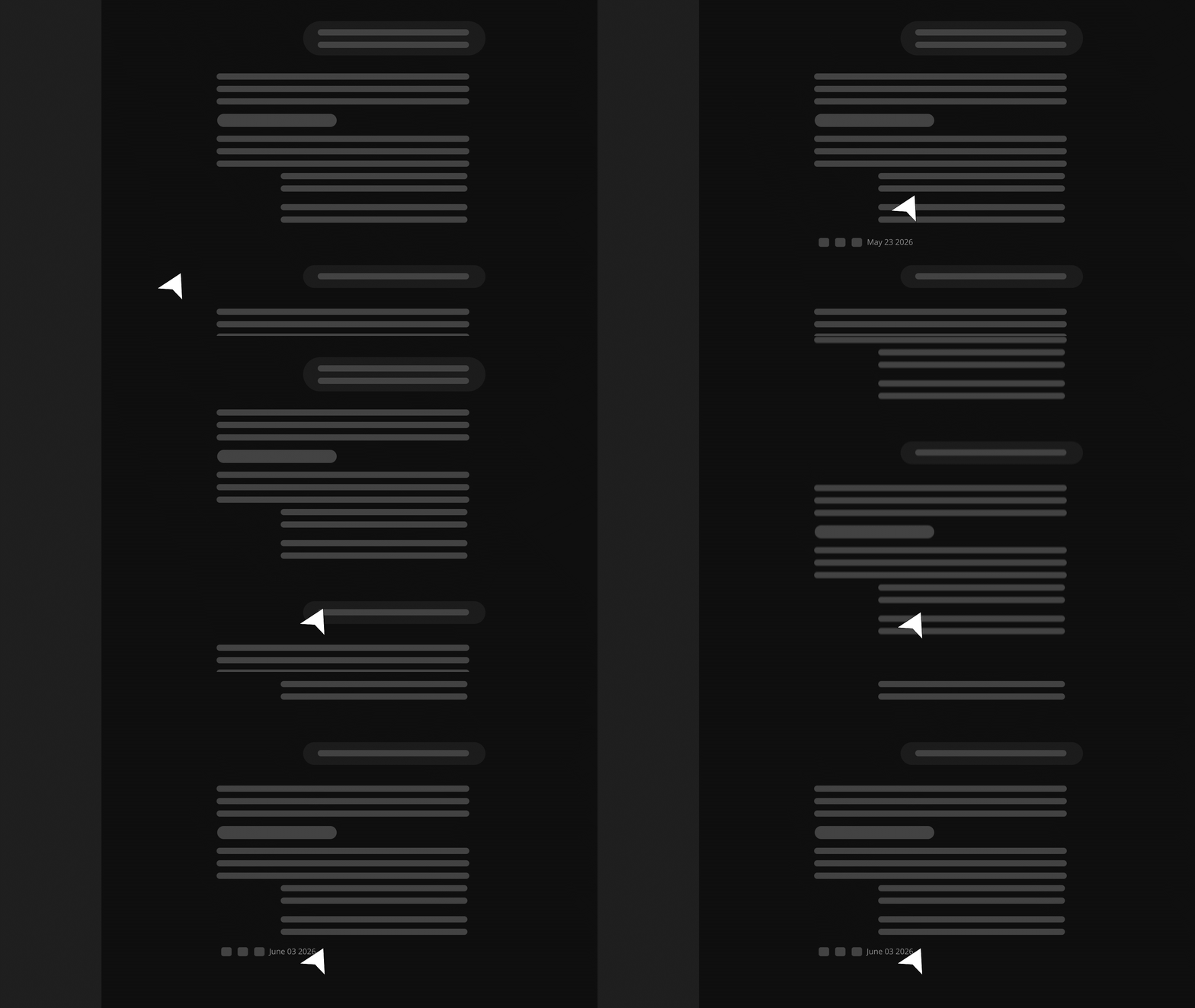
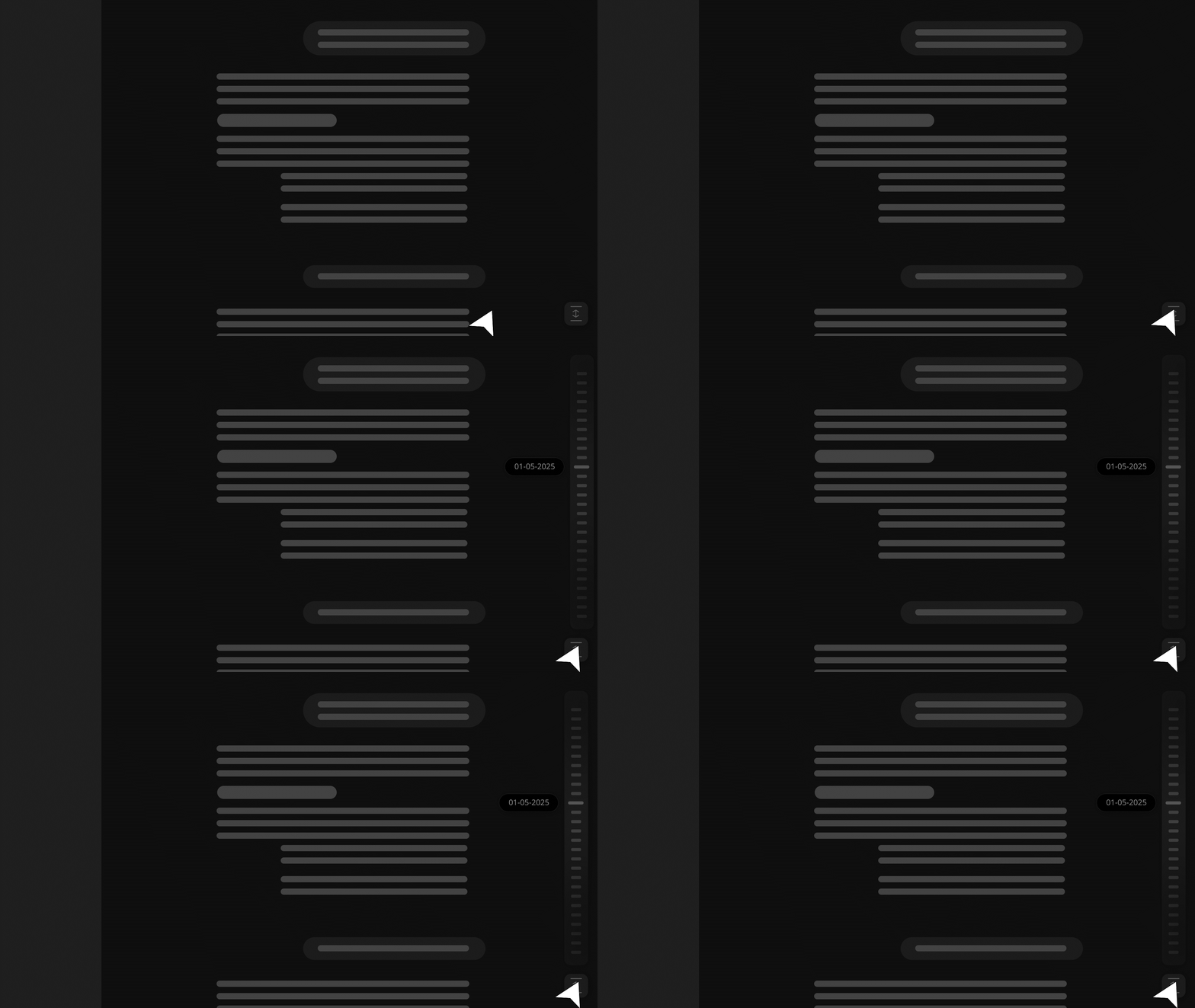
Several solutions came to mind. Showing timestamps on every message would solve the discoverability problem, but it would also introduce significant visual noise. Hiding timestamps behind interactions would keep the interface clean, but many users might never discover them.
A more balanced approach emerged through progressive disclosure:
The Broader Opportunity
What began as a simple question about timestamps ultimately revealed a broader opportunity. AI products have become remarkably good at remembering information, but they are still relatively poor at helping users understand information in context.
As AI continues evolving from a chatbot into a workspace, temporal awareness may become as important as memory itself.
Because in the end, users don't just need to know what happened.
They need to know when it happened, why it mattered, and how it connects to everything that came after.